
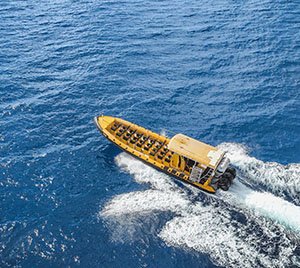




Day’s End Sunset Sip & Sail
Day’s End Sunset Sip & Sail
Starts at $139.00
Premium Open Bar
Guaranteed Sunset Timing
Signature Sailing Experience
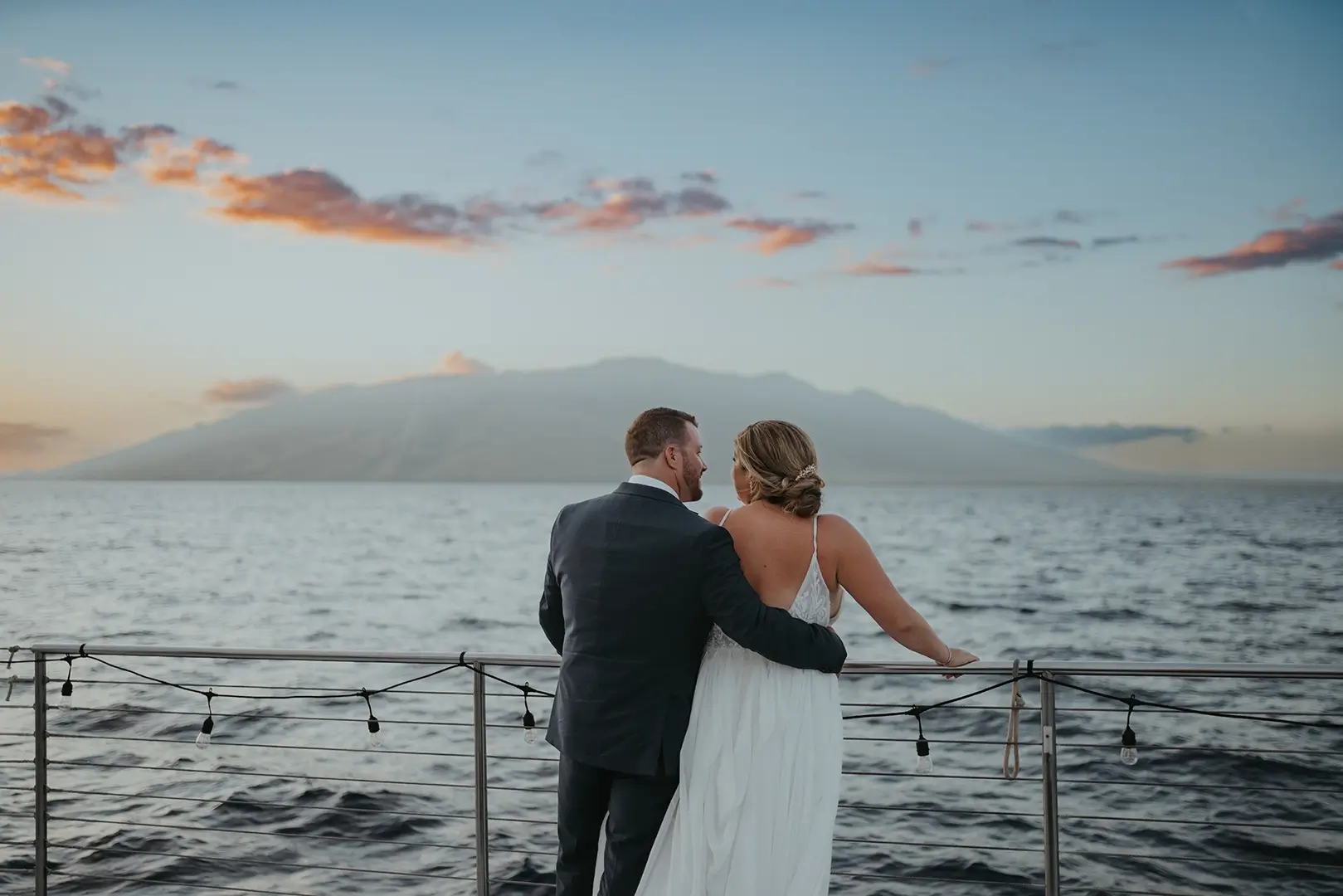
Professional Photographer Onboard
Relaxed, Cocktail Party Vibes
Sunset Served with a Twist
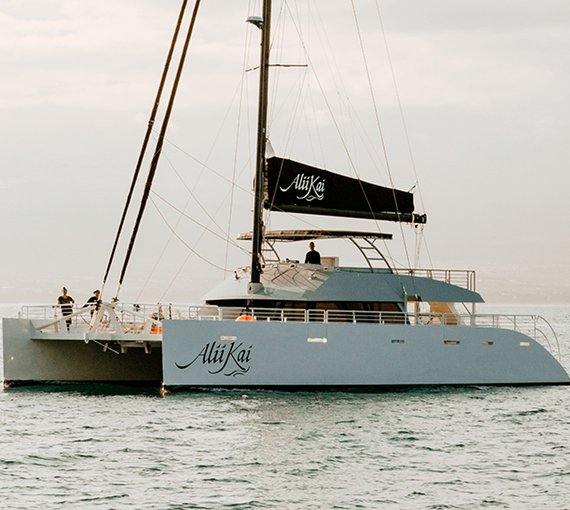
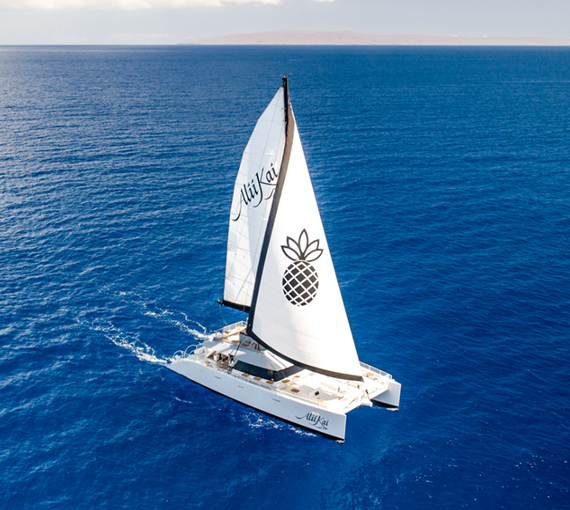
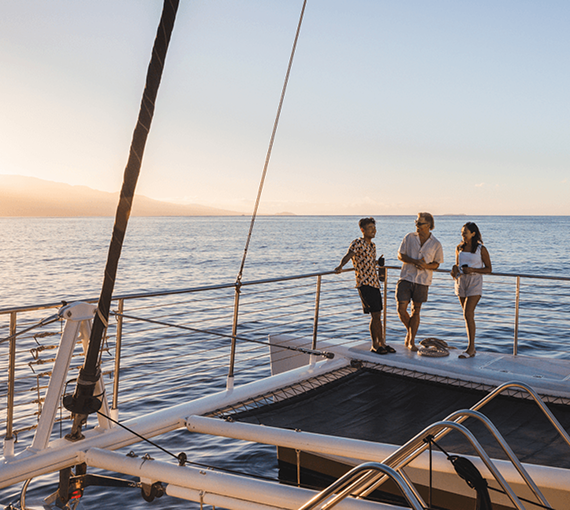
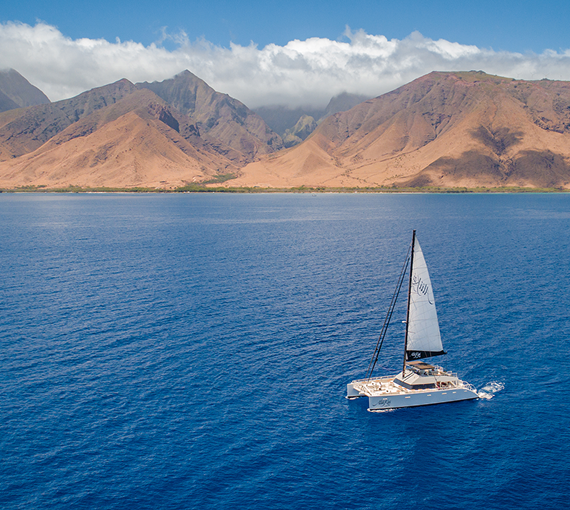
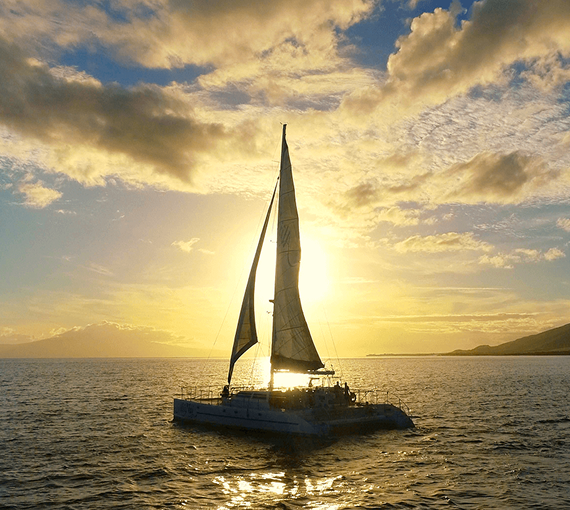
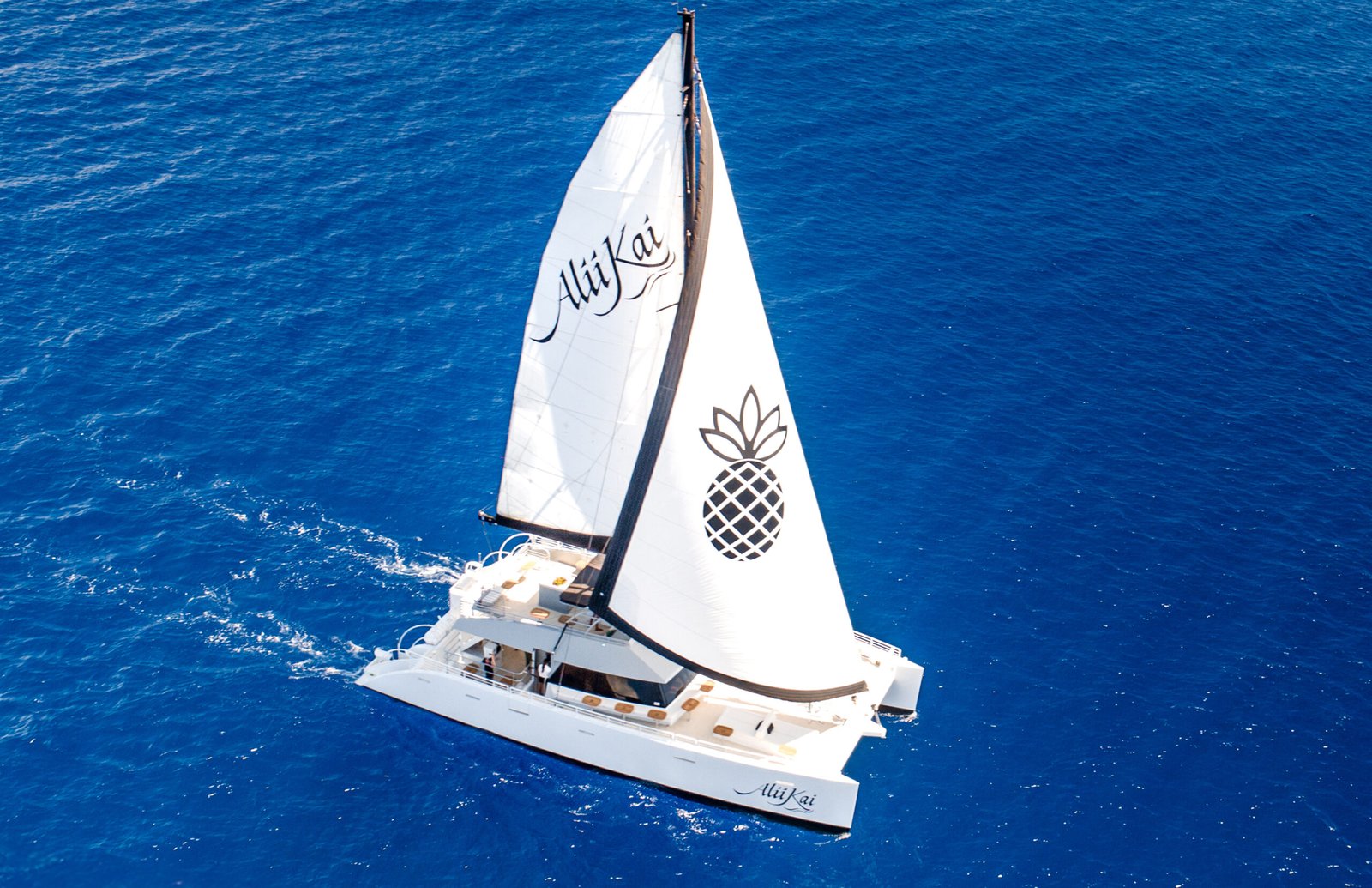
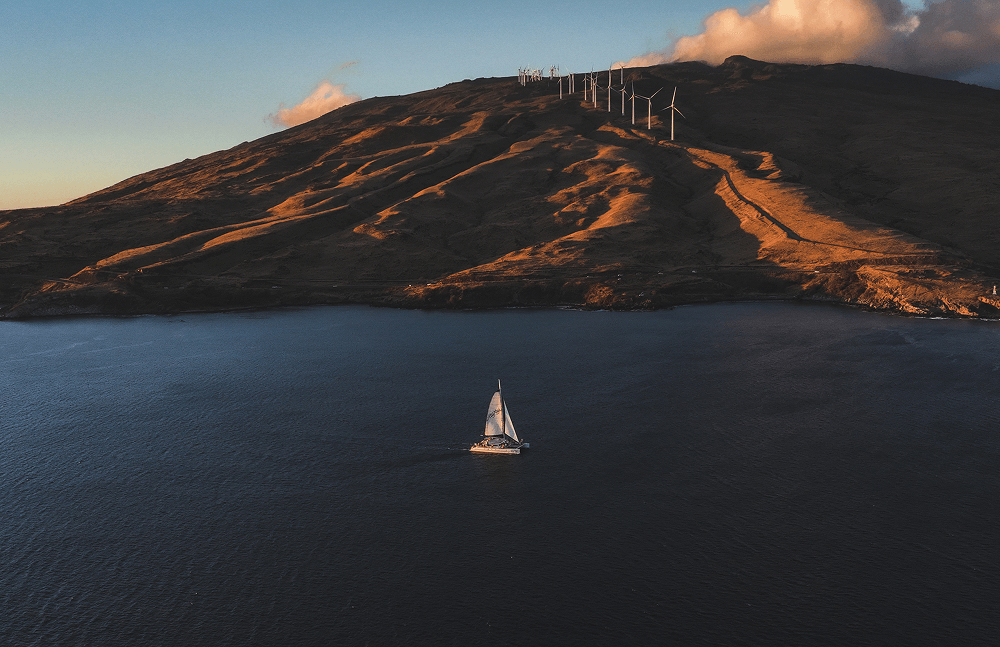
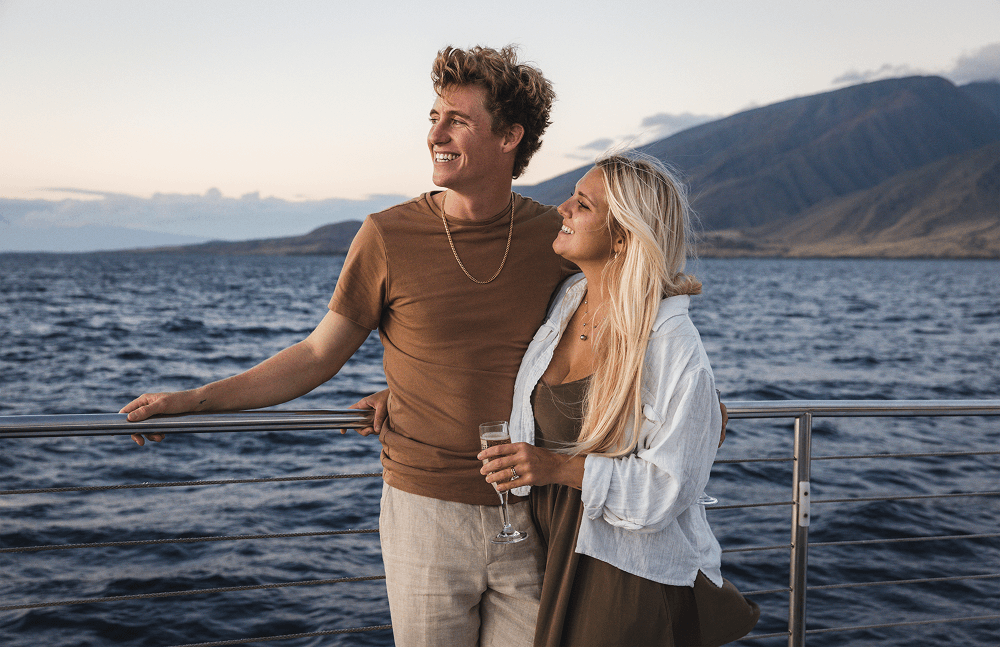
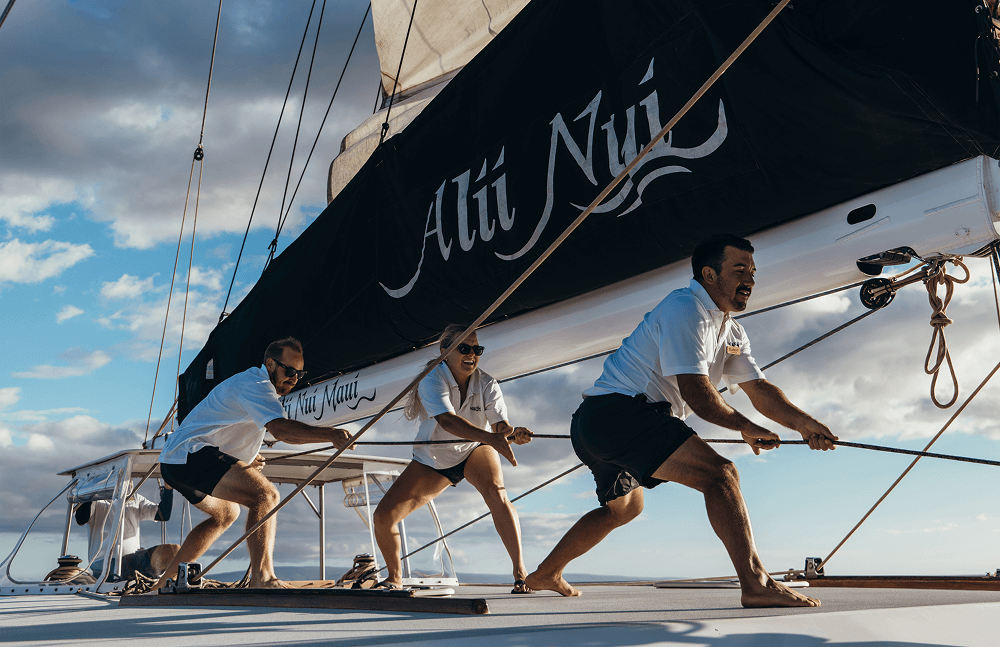
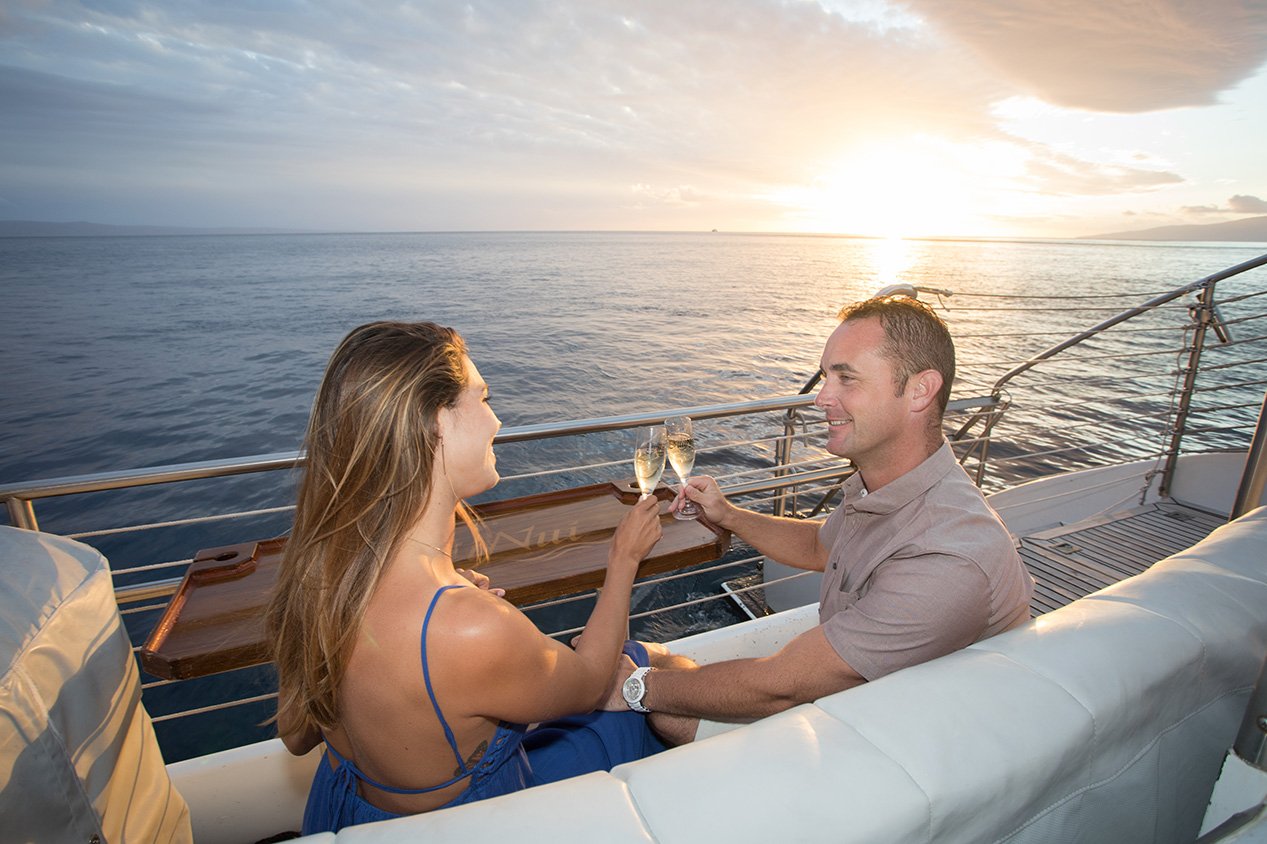
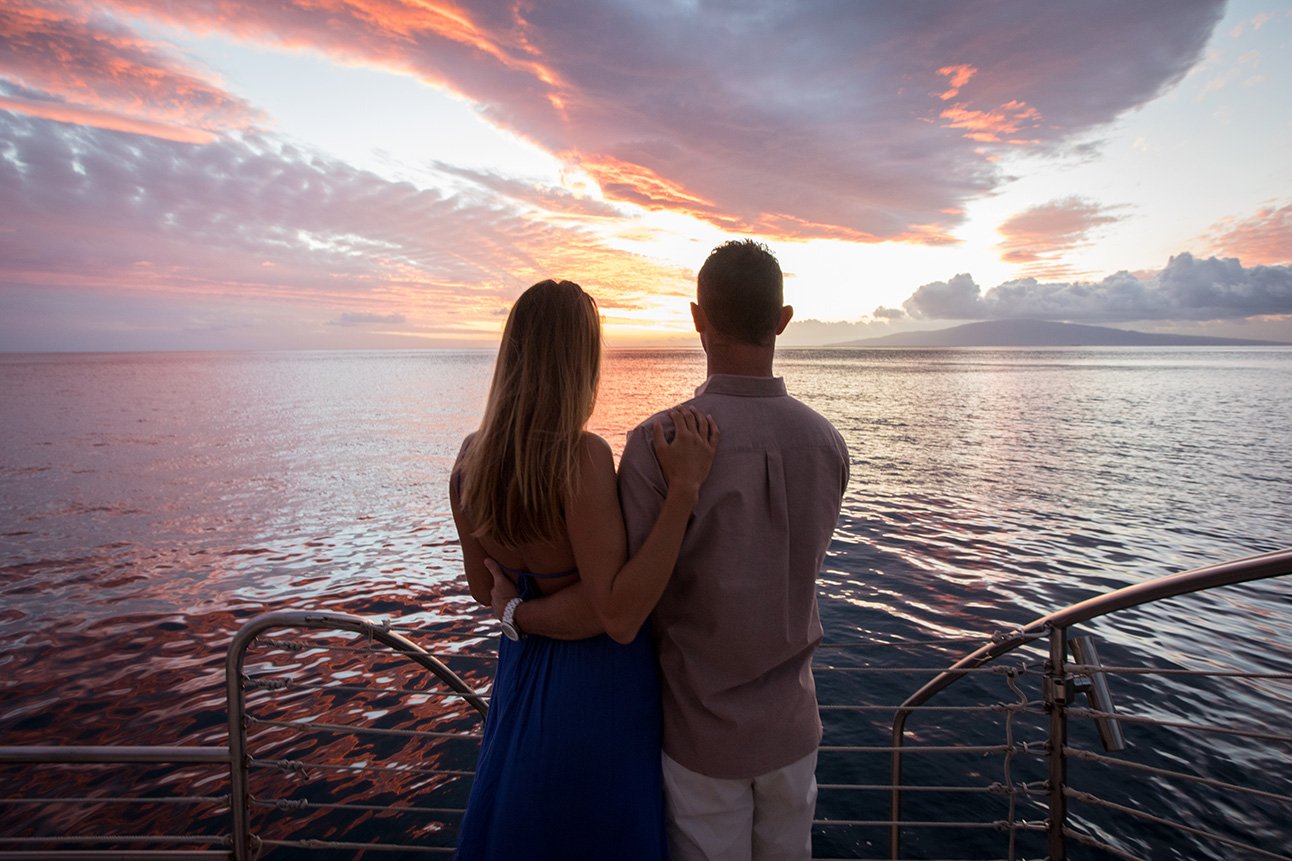
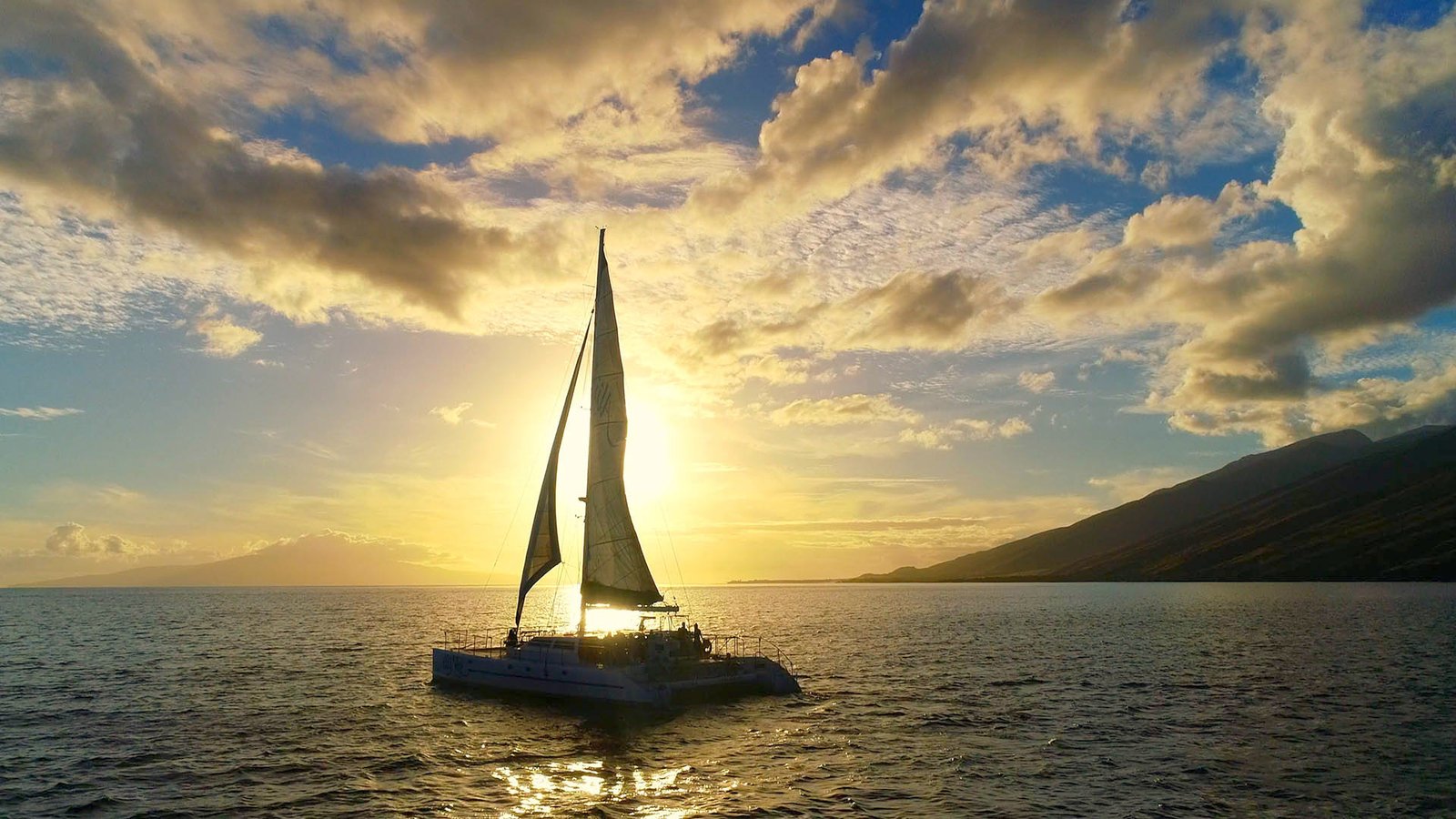
Drift away aboard our 65’ luxury sailing catamaran and sail into golden hour for Maui’s most scenic cocktail hour. This isn’t a dinner cruise, it’s happy hour reimagined (a true ‘pau hana’ at sea) with handcrafted drinks, vibrant music, and a relaxed-yet-refined vibe that turns every pour into a celebration.
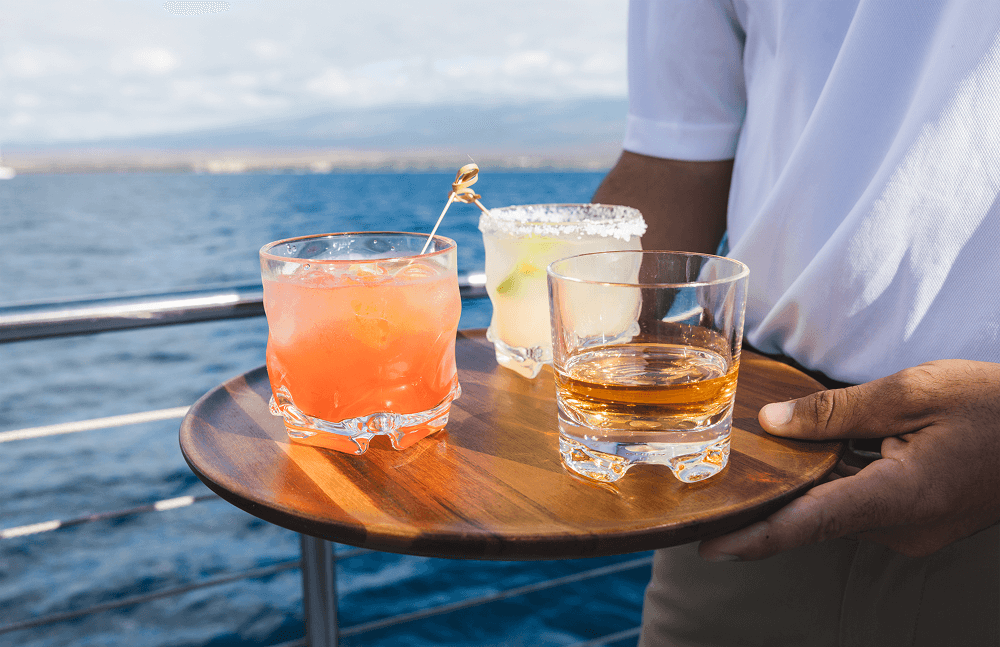
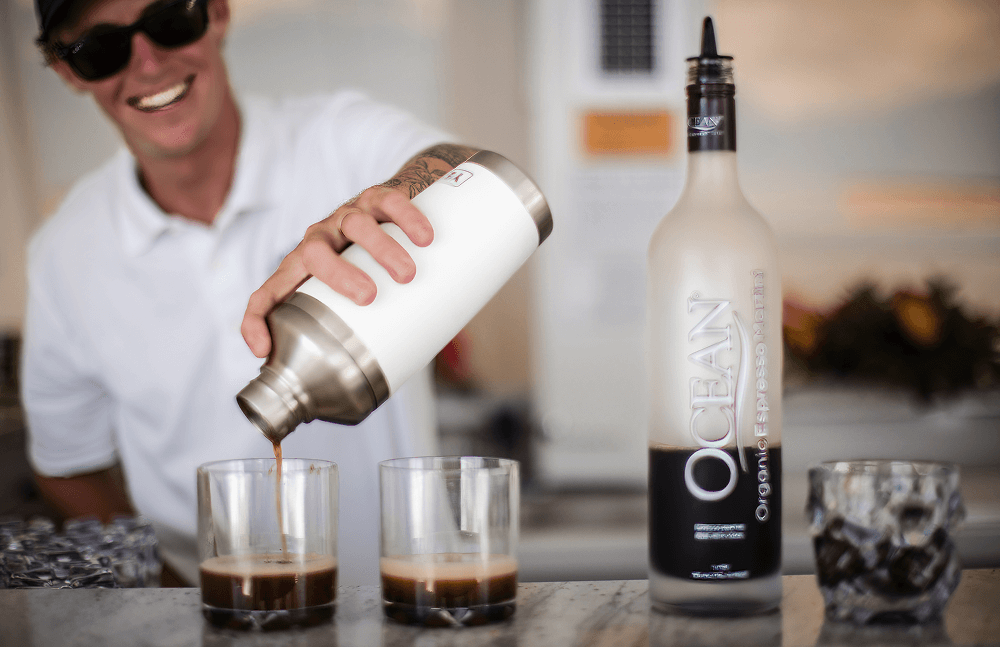
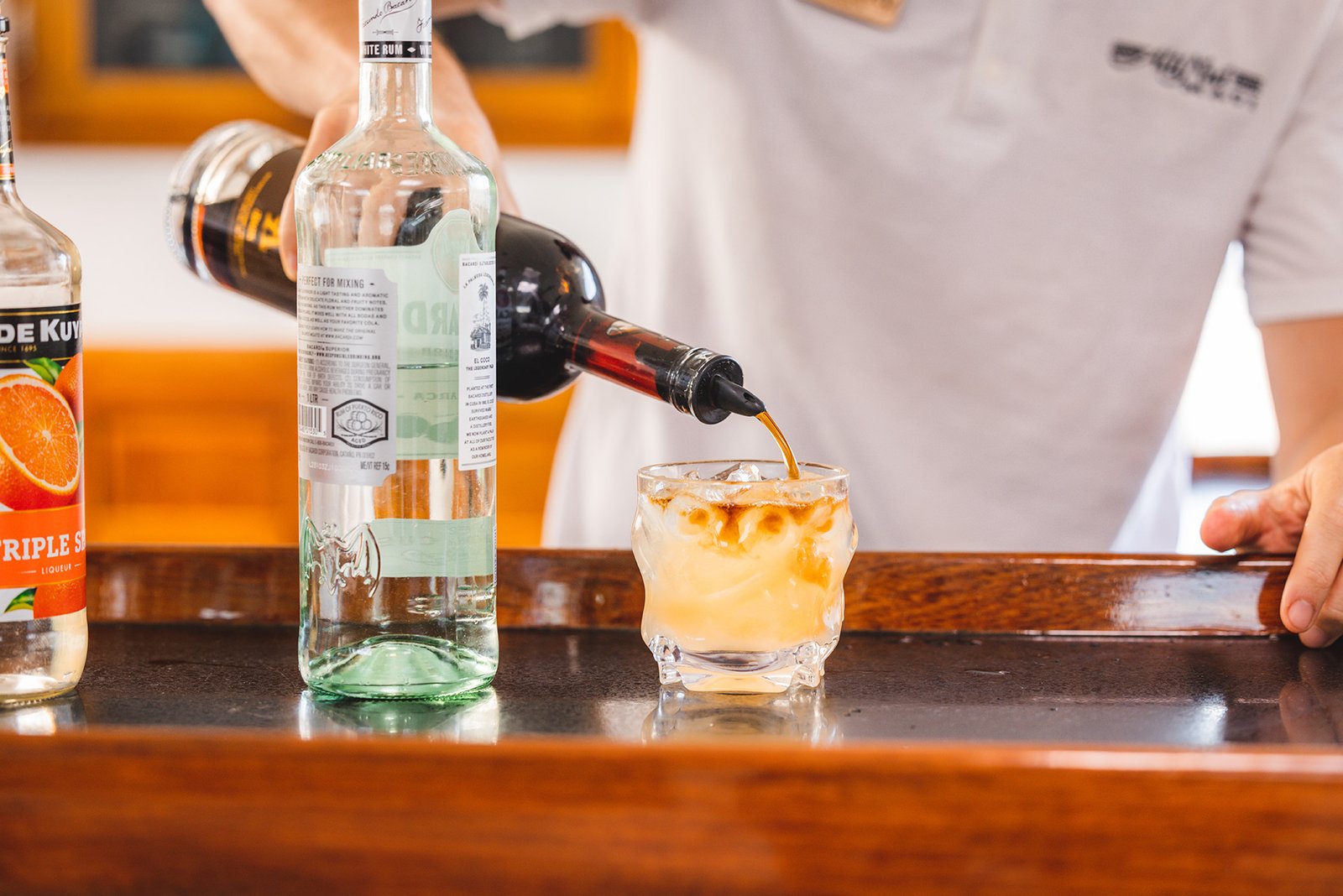
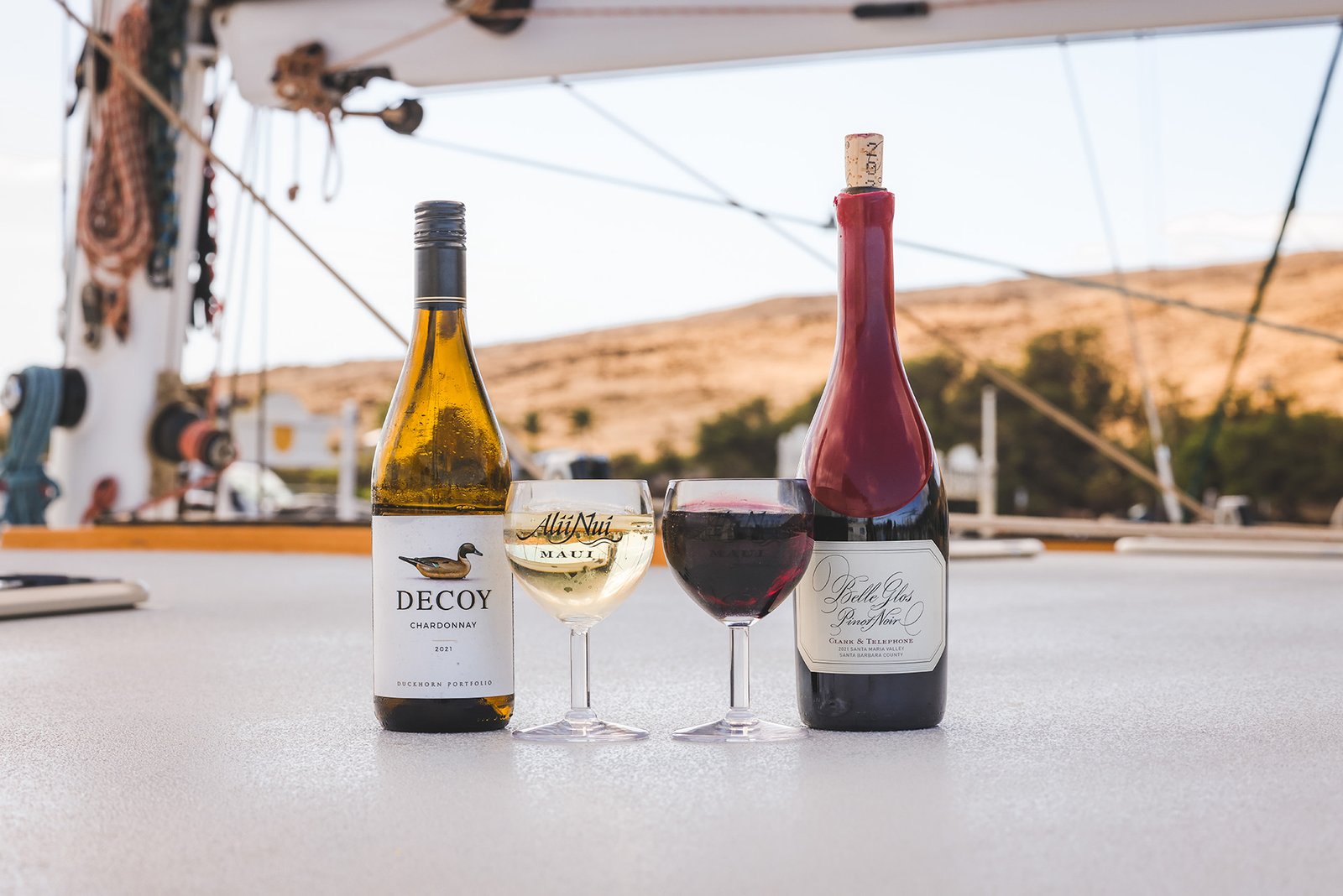
Behind Maui’s best onboard bar, our bartenders mix signature cocktails using locally distilled spirits, fresh island ingredients, and a whole lot of aloha. Sip your way through a rotating menu of house-crafted cocktails, crisp wines, and cold local brews as the sails go up and the breeze hits just right.
Whether you like your sunsets shaken or stirred, raise a glass, take in the view, and let the evening begin.
Behind Maui’s best onboard bar, our bartenders mix signature cocktails using locally distilled spirits, fresh island ingredients, and a whole lot of aloha. Sip your way through a rotating menu of house-crafted cocktails, crisp wines, and cold local brews as the sails go up and the breeze hits just right.
Whether you like your sunsets shaken or stirred, raise a glass, take in the view, and let the evening begin.
What’s Included
- Luxury sailing experience aboard our 65’ sailing catamaran
- Premium open bar with craft cocktails, fine wines & local brews
- Golden hour ambiance with live bartending and upbeat tunes
- Pre-dinner ‘pau hana’ perfection, the ideal happy hour at sea
- Round-trip Wailea resort transportation (optional upgrade)
- Professional photographer onboard for memorable moments
Signature Spirits Upgrade
Take your cocktail hour to the next level with an upgraded open bar featuring Japanese whisky and aged Hawaiian rum, hand-selected for their smooth complexity and sunset-worthy character.
Bright, citrus-forward, and effortlessly elegant, this refined pairing adds a little something extra to your evening at sea. Sails up, spirits high.
Available exclusively as a signature upgrade.
- Light gourmet bites for a little taste of the islands.
- Year round sunset timing guarantee.
- The perfect cocktail hour prior to your favorite dinner reservation.
- Premium open bar with top shelf spirits, craft cocktails, local beers, seltzers, fine wines and bubbles.
-
Hors d'oeuvres
• JACKFRUIT 'CRAB' CAKES
crispy garlic F • SPICY AHI POKE*
big island ahi with sriracha aioli
• Haleakala Beef Satay Skewer with Mango Plum Sauce -
Dinner
• Kula Greens Salad with Candied Macadamia Nuts, Cherry Tomatoes, Shaved Red Onion, and Feta Cheese with Champagne Vinaigrette and House Made Ranch Dressing
• Braised Bok Choy with Lemon-infused Olive Oil
• Purple Molokai Sweet Potato Puree with Coconut Milk and Ginger
• Vegetable Fried Rice with Truffle and Pineapple
• Huli Huli Chicken
• Ginger Braised Short Rib with Ginger Sake Sauce
• Chef's Fresh Catch Special -
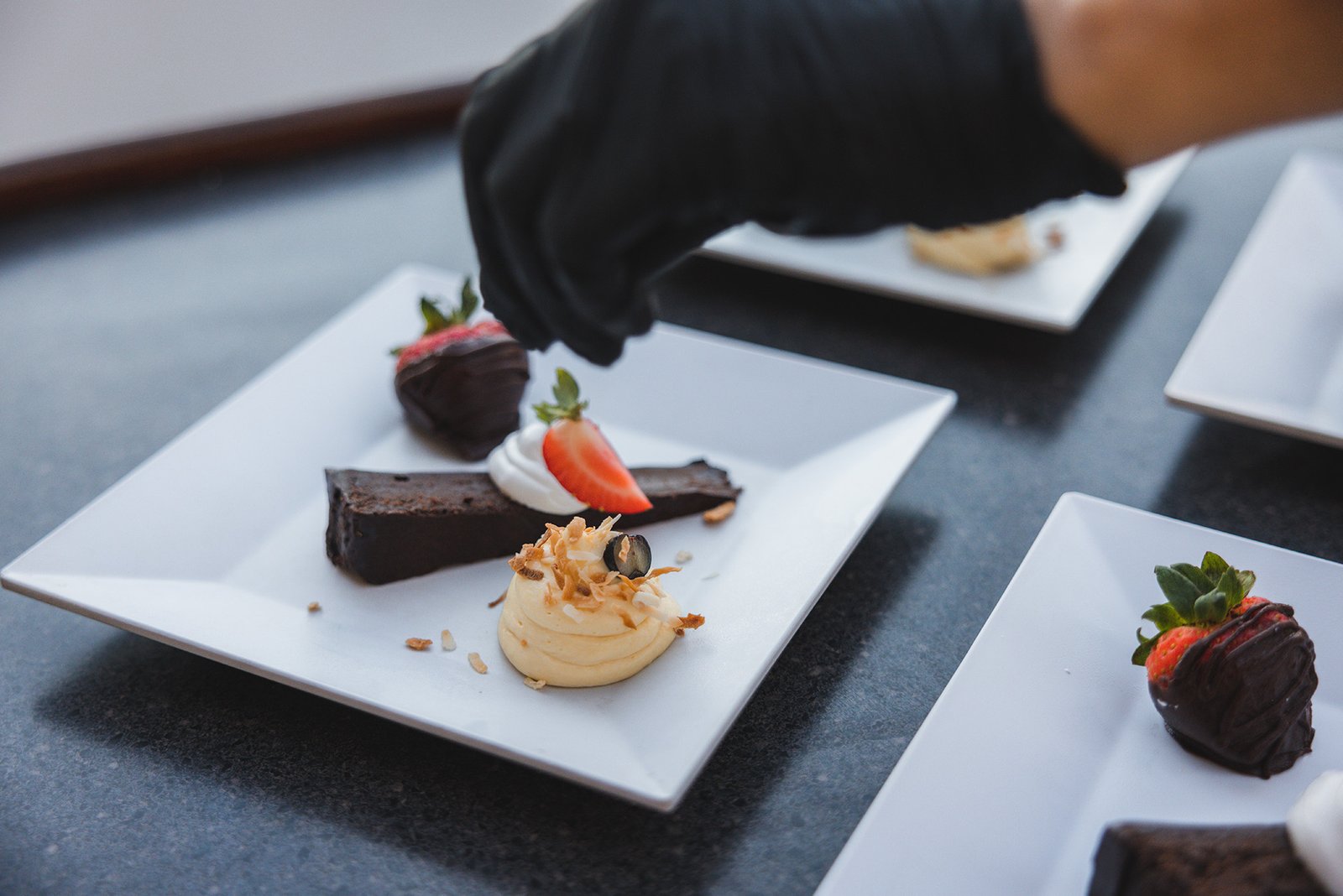
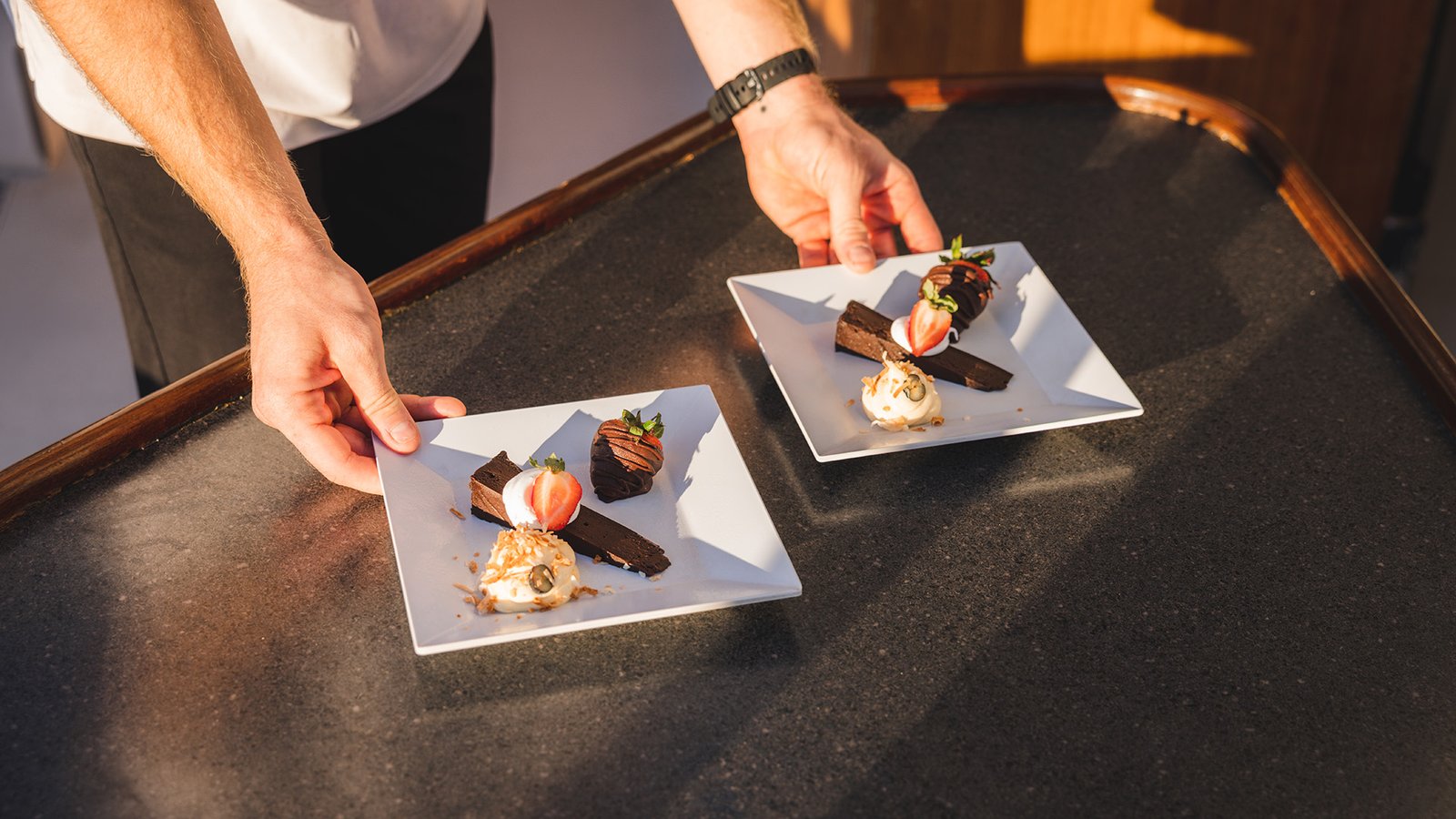
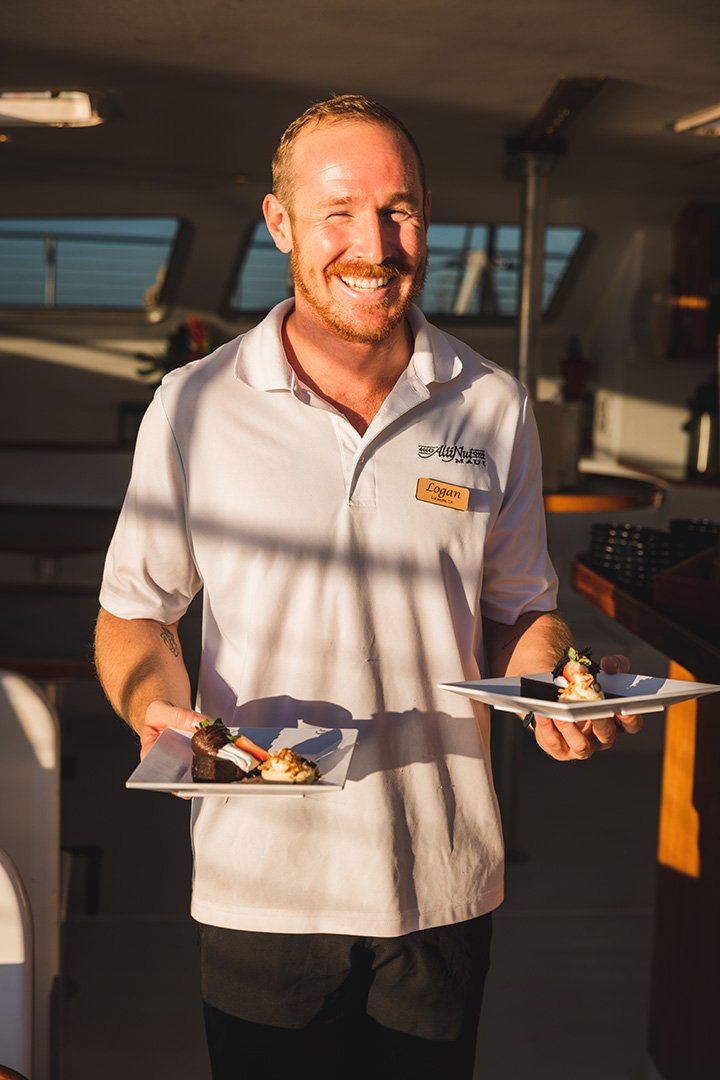
Dessert
• Lilikoi Mousse with Whipped Cream
• Chocolate Torte
• Chocolate Covered Strawberries -
Beverages
• Coffee & Tea Bar
• POG, Orange, Pineapple, and Cranberry Juice
• Coca Cola Soda products and filtered water
• Beer, Wine, Sparkling Wine, and Seltzers**
• Open Premium Bar featuring rum, gin, vodka, tequila, and whisky cocktails**
**alcoholic beverages for guests 21+ with valid state ID
Food Menu
A variety of upscale hot and cold appetizers will be accompanied by a wide selection of domestic & craft beers, seltzers, premium red & white wines and champagne, and top tier liquors (ID required for alcohol consumption and for your safety.)
Like the lava, Hawaii’s culture and cuisine have grown, layer by layer, over years, expanding as waves of immigrants have each brought something new to the islands. These ingredients— beef, rice, spam, pineapples, soy sauce, black pepper, and many others—mingled and fused to create the “local style” dishes that are unmistakably and perplexingly Hawaiian.
Digging down through the layers of Hawaii’s home cooking exposes a chronology of people, plants, and politics that together build what we think of as Hawaiian cuisine today.
Digging down through the layers of Hawaii’s home cooking exposes a chronology of people, plants, and politics that together build what we think of as Hawaiian cuisine today.
These first immigrants brought an onslaught of imported foodstuffs, including chickens, pigs, and the staples known as canoe plants: taro, bananas, breadfruit, sugarcane, and coconuts.
These basic ingredients, flavored with ti leaves, ginger, and thick granules of sea salt gave the ancient Hawaiians a health and vitality that impressed the motley crew of European sailors who arrived with Captain Cook in 1778.
In addition to poi, the Hawaiians mixed taro with coconut and sugar cane into a thick, chewy pudding called kulolo. Taro leaves known as lū’au, gave the classic Hawaiian feast its modern name. The leaves were wrapped around meat to grill on hot rocks (laulau) or stewed with coconut milk and bits of fish or diced meat (lū‘au ‘ulo) and served, of course, with a calabash of poi. Everything else—the seaweed, the poke (marinated raw fish), kālua pig smoked with sandalwood over hot rocks—was a condiment to add flavor to poi. Even the earliest Europeans ate a diet dependent on poi, although they brought their own seasonings and sides.
These basic ingredients, flavored with ti leaves, ginger, and thick granules of sea salt gave the ancient Hawaiians a health and vitality that impressed the motley crew of European sailors who arrived with Captain Cook in 1778.
In addition to poi, the Hawaiians mixed taro with coconut and sugar cane into a thick, chewy pudding called kulolo. Taro leaves known as lū’au, gave the classic Hawaiian feast its modern name. The leaves were wrapped around meat to grill on hot rocks (laulau) or stewed with coconut milk and bits of fish or diced meat (lū‘au ‘ulo) and served, of course, with a calabash of poi. Everything else—the seaweed, the poke (marinated raw fish), kālua pig smoked with sandalwood over hot rocks—was a condiment to add flavor to poi. Even the earliest Europeans ate a diet dependent on poi, although they brought their own seasonings and sides.
The first cattle landed at a Hawaiian port in 1793, a gift from Captain George Vancouver to King Kamehameha I. The king put a royal prohibition known as a kapu on the small herd and allowed it to grow until the feral one-ton pipi were a destructive danger. In 1831, a Spanish vaquero fled unrest in Mexican-Spanish California, arriving in Hawaii on a whaling ship. He ended up in service to the king as a cattle herder. Over the next few decades, more vaqueros settled in the area, bringing recipes using black pepper, garlic, onion, hot chilies, and, of course, every part of the cow.
Chinese sugar laborers began arriving as strikebreakers in 1852 after native Hawaiian workers started walking off the job over low pay and poor working conditions. In the next three decades, the population of Chinese grew from fewer than 400 individuals to more than 18,000.
Legend has it that the first strike staged by Chinese laborers was over poi rations. They demanded rice, not poi, and they got it. Chinese appetites fueled a local market that became a lucrative export industry as profitable as sugar cane. Many Chinese laborers, on completing their five-year contracts, obtained land leases and filled abandoned taro fields with rice. Today, Hawaiians consume nearly four times more rice than mainland Americans, and the double scoop of rice is a plate lunch fixture.
The Chinese also brought saimin, a Chinese noodle soup in clear broth. Even after the era of Chinese immigrant laborers was over, every subsequent immigrant group adopted saimin and added their own toppings, which is why modern versions can have char siu, Portuguese sausage, Japanese kamaboko (fish cake), Korean kimchi and Spam all in the same bowl.
Legend has it that the first strike staged by Chinese laborers was over poi rations. They demanded rice, not poi, and they got it. Chinese appetites fueled a local market that became a lucrative export industry as profitable as sugar cane. Many Chinese laborers, on completing their five-year contracts, obtained land leases and filled abandoned taro fields with rice. Today, Hawaiians consume nearly four times more rice than mainland Americans, and the double scoop of rice is a plate lunch fixture.
The Chinese also brought saimin, a Chinese noodle soup in clear broth. Even after the era of Chinese immigrant laborers was over, every subsequent immigrant group adopted saimin and added their own toppings, which is why modern versions can have char siu, Portuguese sausage, Japanese kamaboko (fish cake), Korean kimchi and Spam all in the same bowl.
Portuguese sailors playing the fur and whaling trades began passing through Hawaii early on but became more common after 1830, when drought and famine hit the Portuguese islands. The sailors acquired salted salmon from Native Americans on the U.S. mainland and ate it as a substitute for bacalhau, the salted codfish base of Portuguese recipes. They rarely settled, but when they docked in Hawaii the sailors bartered salmon for beef, sugar, and coffee. Diced finely with onion and tomato, salmon salad (lomi-lomi) became a staple of Hawaii’s poor and eventually replaced the traditional poke at Hawaiian lū‘au.
When Japanese citizens were finally permitted to seek work abroad in 1885 after nearly three centuries of isolationist politics, they came to Hawaii at an unprecedented rate. Their population grew from only 116 in 1884 to over 100,000 in 1920. They’re still one of the biggest ethnic groups.
Japanese food preferences were so influential that their dislike of the long-grain rice grown by local Chinese farmers ended the Hawaiian rice industry and prompted Hawai`i to import short- grain rice from California. The problem with long-grain rice was that it didn’t clump easily for pressing into o-musubi, rectangular bars of rice, meat, or pickles wrapped in green-black nori or laver that Japanese field hands could pocket for a snack. After World War II, the Spam musubi on our Styrofoam plate, with its greasy pink slab, became a favorite grab-n-go lunch item.
Laborers also packed rice, with one or two entrées and a few sides, in the segmented bento box that evolved into the iconic Hawaiian plate lunch. Ours features a Japanese-influenced entrée, chicken katsu, along with the requisite double scoop of short-grain rice and a shiny lump of macaroni salad. The chicken is fried in a light tempura batter and sliced into boneless strips, and comes with a gingery soy sauce.
Laborers also packed rice, with one or two entrées and a few sides, in the segmented bento box that evolved into the iconic Hawaiian plate lunch. Ours features a Japanese-influenced entrée, chicken katsu, along with the requisite double scoop of short-grain rice and a shiny lump of macaroni salad. The chicken is fried in a light tempura batter and sliced into boneless strips, and comes with a gingery soy sauce.
Puerto Ricans were an obvious choice to break the Japanese sugar strikes; Puerto Rico was a newly acquired U.S. territory, so restrictions placed by Congress on hiring foreign workers didn’t apply. Records of Puerto Rican arrivals weren’t even required, so it’s only an estimate that 5,000 of the new arrivals took over the sugar fields in 1901. To top it off, Puerto Rico’s thriving cane fields were demolished by two hurricanes in 1899. The market was free of competition and Puerto Rico’s experienced cane workers were in need of jobs.
While the period of Puerto Rican immigration was relatively short, local Hawaiians have developed a bit of a cult following for the nameless hole-in-the-walls, food trucks, and roving table-and-tent set-ups that serve Puerto Rican fare along the highways.
While the period of Puerto Rican immigration was relatively short, local Hawaiians have developed a bit of a cult following for the nameless hole-in-the-walls, food trucks, and roving table-and-tent set-ups that serve Puerto Rican fare along the highways.
Local-style kimchi has been sold at mainstream grocery stores since at least 1939. Unlike the authentic soggy, heavily fermented version, in Hawai`i, kimchi is eaten crisp and spicy, freshly pickled in hot chili pepper brine. It’s a salty, tangy, and spicy vegetable condiment I think I could eat on everything, which is probably why, in Hawai`i, they do. Kimchi pizza is authentically Hawaiian; pizza with pineapple chunks is not.
The pineapple did play a role in bringing the first Korean immigrants to Hawaii in 1903. The first pineapple plantations were established at the end of the 1890s, and when the Japanese started striking there weren’t enough laborers for both sugar and pineapple fields. In desperation, the sugar planters sent a recruiter to Korea in 1902. He made agreements with the Christian missionaries there to bring laborers illegally into Hawai`i, violating contract immigration laws. Between 1903 and 1905, over 7,000 Korean Christians became illegal immigrants. By the time legal immigrants arrived after the Korean War, their food was already absorbed into the Hawaiian melting pot.
Kimchi is now ubiquitous, added to saimin soup or tucked inside musubi, or spread over kālua pork sandwiches. It’s also often served as a side to Korean-style barbecues like bulgogi or kalbi.
The pineapple did play a role in bringing the first Korean immigrants to Hawaii in 1903. The first pineapple plantations were established at the end of the 1890s, and when the Japanese started striking there weren’t enough laborers for both sugar and pineapple fields. In desperation, the sugar planters sent a recruiter to Korea in 1902. He made agreements with the Christian missionaries there to bring laborers illegally into Hawai`i, violating contract immigration laws. Between 1903 and 1905, over 7,000 Korean Christians became illegal immigrants. By the time legal immigrants arrived after the Korean War, their food was already absorbed into the Hawaiian melting pot.
Kimchi is now ubiquitous, added to saimin soup or tucked inside musubi, or spread over kālua pork sandwiches. It’s also often served as a side to Korean-style barbecues like bulgogi or kalbi.
The Filipinos were first brought to Hawaii in 1907 as strikebreakers. At that time the Philippines was a U.S. territory so plantations could avoid immigration hassles by recruiting Filipino workers. The first 150 arrived that year. By 1935, Filipinos comprised 70 percent of the labor force, and as of 2010, they’re the largest ethnic group in Hawai`i.
Maybe because the Philippines itself was already a cultural melting pot, Filipino cuisine quickly became a staple. You can find ensaymada in bakeries and binignit on supermarket shelves. Adobo, a messy, saucy stew made from either pork or chicken boiled in vinegar and soy sauce, can be found on the Hawaiian lunch plate in a trifecta with rice and mac salad, a mysterious combination that can only be explained by the last major cultural influence on Hawai`i: becoming part of America.
Maybe because the Philippines itself was already a cultural melting pot, Filipino cuisine quickly became a staple. You can find ensaymada in bakeries and binignit on supermarket shelves. Adobo, a messy, saucy stew made from either pork or chicken boiled in vinegar and soy sauce, can be found on the Hawaiian lunch plate in a trifecta with rice and mac salad, a mysterious combination that can only be explained by the last major cultural influence on Hawai`i: becoming part of America.
Americans began arriving in Hawaii in droves after the Pearl Harbor bombing: first, the influx of 40,000 military servicemen, then up to a million tourists a year by the 1960s after Hawaii became a state.
It’s possible that missionaries brought the recipe for the overcooked, swollen macaroni noodles served cold and slathered in mayonnaise since “deli mac” was a popular food item in New England in the 1920s. It’s also possible military cooks introduced it during the war, along with Spam. G.I.s on reprieve preferred to frequent hamburger joints and drive-ins, inspiring the 1940s invention of loco moco, a hearty mess of sunny-side up eggs over beef patties and rice slathered in gravy.
Pineapple companies capitalized on America’s post-war infatuation with Hawai`i . Several 1950s cookbooks like “A Hawaiian Lu’au” taught mainlanders how to make “Hawaiian” creations never before served on the islands, like pineapple baked beans or pineapple upside-down cake. Canadians invented Hawaiian pizza around this time. Eventually, even Hawaiian cooks added pineapple to dishes like Spam fried rice, partly to placate expectant tourists, and partly for the delicious freshness pineapple adds to starch-heavy, pork-heavy, fried Hawaiian comfort food.
In 1992, twelve Hawaiian chefs officially introduced the idea of “Hawaii Regional Cuisine,” local- style food using fresh ingredients that grow on the islands. The chefs formed a non-profit and trademarked their new designation.
It’s possible that missionaries brought the recipe for the overcooked, swollen macaroni noodles served cold and slathered in mayonnaise since “deli mac” was a popular food item in New England in the 1920s. It’s also possible military cooks introduced it during the war, along with Spam. G.I.s on reprieve preferred to frequent hamburger joints and drive-ins, inspiring the 1940s invention of loco moco, a hearty mess of sunny-side up eggs over beef patties and rice slathered in gravy.
Pineapple companies capitalized on America’s post-war infatuation with Hawai`i . Several 1950s cookbooks like “A Hawaiian Lu’au” taught mainlanders how to make “Hawaiian” creations never before served on the islands, like pineapple baked beans or pineapple upside-down cake. Canadians invented Hawaiian pizza around this time. Eventually, even Hawaiian cooks added pineapple to dishes like Spam fried rice, partly to placate expectant tourists, and partly for the delicious freshness pineapple adds to starch-heavy, pork-heavy, fried Hawaiian comfort food.
In 1992, twelve Hawaiian chefs officially introduced the idea of “Hawaii Regional Cuisine,” local- style food using fresh ingredients that grow on the islands. The chefs formed a non-profit and trademarked their new designation.
Additional Information
Vessel Location: Slip #56 Ma’alaea Harbor (300 Ma’alea Road, Wailuku, HI 96753) on the Oceanside Pier.
Parking: Arrive early to the harbor to use the posted QR codes for convenient parking payment via your smartphone. Rates are approximately $1 per hour, and the tour is expected to last around 2 hours.
*We recommend arriving to the harbor at least 15 minutes prior to check-in
Check-In Time: 15 minutes prior to departure (please note departure times vary by month).
Parking: Arrive early to the harbor to use the posted QR codes for convenient parking payment via your smartphone. Rates are approximately $1 per hour, and the tour is expected to last around 2 hours.
*We recommend arriving to the harbor at least 15 minutes prior to check-in
Check-In Time: 15 minutes prior to departure (please note departure times vary by month).
Reviews
Day’s End Sunset Sip & Sail
Starts at $139.00
Premium Open Bar
Guaranteed Sunset Timing
Signature Sailing Experience
Professional Photographer Onboard
Relaxed, Cocktail Party Vibes